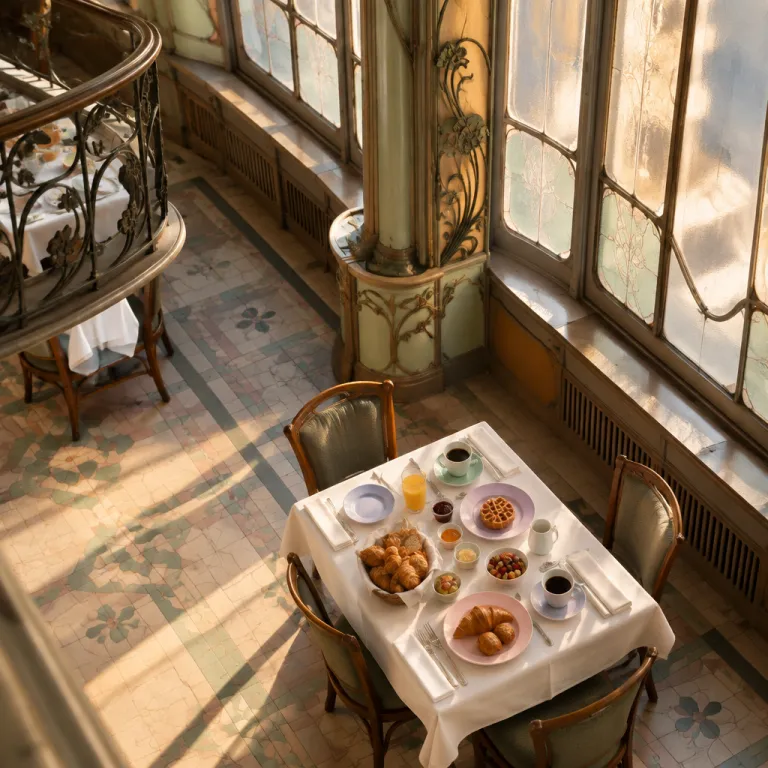
Why an art nouveau breakfast changes how you see Belgium
In Belgium, the most memorable art nouveau moments often happen before noon. When you choose an art nouveau hotel restaurant in Belgium, the first coffee of the day unfolds under stained glass rather than street awnings, and the architecture frames your morning as carefully as any chef plates a dish. That shift from pavement to interior turns a simple breakfast into a quiet masterclass in art nouveau architecture and Belgian hospitality.
Art nouveau was conceived as a total work of art, where every hotel, house and restaurant was built as a coherent universe. The same architect who drew the flowing facade often designed the central staircase, the glass light wells, the cutlery and even the porteuse d’eau figure on a dining room wall, so the nouveau style touches everything your hand grazes. When you sit down in an art nouveau hotel restaurant in Belgium, you are not just near a famous building; you are inside the architecture, sharing the same light that once guided architect Victor Horta’s pencil across tracing paper.
That is why the interior matters more than a pretty street view in this city. In Brussels, where the Horta Museum, Hôtel Solvay and Hôtel Tassel anchor the UNESCO listed art nouveau ensemble, the most rewarding stays place you within walking distance of these nouveau buildings yet give you their spirit at breakfast. A carefully restored dining room with original stained glass, curved woodwork and a central staircase echoing Horta’s vocabulary will always feel more authentic than a generic room with a framed poster of the Musical Instruments Museum or a comment about Victor Horta in the lobby.
From facade to fork: how to tell real art nouveau from pastiche
Not every art nouveau hotel restaurant in Belgium offers the same depth of experience. Some properties trade on a single curved facade or a few pieces of stained glass, while the rest of the building feels like any contemporary city hotel. Others treat art nouveau as a living architecture, where the dining room, bar and central staircase are all part of a coherent design language that runs from the porteuse d’eau motif on a menu to the curve of a banquette.
When you evaluate a location in Brussels, look beyond the marketing photographs and ask how the building was originally built and for whom. A former town house by architect Victor Horta or Paul Saintenoy, especially one linked to patrons such as Armand Solvay, usually carries a richer narrative than a new construction with a few nouveau style flourishes. Properties that reference the Horta Museum, Hôtel Solvay or Cauchie House as neighbours without explaining their own architectural story often signal a lighter relationship with the heritage.
Authentic art nouveau hotels tend to share several traits that you can verify before booking. The architecture usually features a visible central staircase with organic ironwork, generous glass panels and a facade that reads as a single sculpted surface rather than a stack of floors. Dining rooms often preserve original wood panelling, floral mosaics or musical instruments inspired ornament that quietly echoes the Musical Instruments Museum and the wider Brussels museum culture, and if you are pairing your stay with a day of façade hunting, this is where a guide to Liège’s art nouveau secrets can extend the journey beyond the capital through a curated article on art nouveau facades in Liège.
A couple’s slow morning inside the architecture
Picture a quiet Brussels side street just after sunrise, the city still stretching awake. You and your partner walk down from your room, following the curve of a central staircase that feels closer to sculpture than structure, the ironwork echoing lines you admired at the Horta Museum the previous afternoon. Light filters through stained glass in soft greens and ambers, casting patterns on the floor that change with every step toward the restaurant.
The dining room of a true art nouveau hotel restaurant in Belgium never needs heavy decoration because the architecture does the talking. A glass canopy might diffuse the northern light, while slender columns and a flowing facade outside create a sense of privacy without shutting out the city beyond. You notice how the chairs, the cutlery and even the typography of the menu quietly reference the same nouveau style curves you saw at Cauchie House or near Hôtel Tassel, and suddenly breakfast feels like an extension of the museum circuit rather than a pause from it.
Couples who travel for both gastronomy and design will appreciate how these interiors slow the pace of the day. Instead of rushing out to the Musical Instruments Museum or another department store turned cultural venue, you linger over coffee, watching reflections dance in the glass and tracing the line from art nouveau to art deco in the ceiling mouldings. Later, when you head to neighbourhoods such as Zurenborg in Antwerp for more nouveau buildings, a well chosen property from a guide to Antwerp’s art nouveau streets will echo the same architectural intimacy you enjoyed at breakfast.
Pairing breakfast rooms with Brussels’ art nouveau landmarks
Choosing the right art nouveau hotel restaurant in Belgium lets you build an itinerary where every meal aligns with a landmark. In Brussels, staying near the Horta Museum, Hôtel Solvay or Hôtel Tassel means you can start the day inside one work of art before stepping out to visit others, turning the city into a continuous gallery of glass, stone and light. The key is to think of your hotel as the first museum of the day, not just a place to sleep.
Begin with a property whose building dates from the height of nouveau architecture and whose restaurant still respects the original design. After breakfast, walk toward Avenue Louise or the Bailli area, where the facades of nouveau buildings by Victor Horta, Paul Cauchie and Paul Saintenoy line the streets like an open air museum. From there, you can continue to the Musical Instruments Museum, housed in a former department store whose iron and glass structure offers a different take on the same architectural language, then circle back through quieter residential streets to appreciate how art nouveau and art deco coexist in the same city blocks.
On another morning, plan a route that connects your hotel’s dining room to Cauchie House and the wider museum quarter. Enjoy a slow breakfast under stained glass, then follow a self guided trail past town houses where architect Victor Horta experimented with new ways to bring light into narrow plots, noting how the porteuse d’eau figures and floral ironwork reappear from building to building. When you are ready for an afternoon break, a curated guide to Belgian bean to bar makers on beyond the chocolate shop chocolate experiences can help you pair architectural walks with serious chocolate rather than tourist traps.
How to be a respectful guest inside listed interiors
Staying in an art nouveau hotel restaurant in Belgium means sharing space with fragile heritage. These interiors were built as private homes or grand houses for families such as the Solvays, not as backdrops for constant photography, and the patina you admire on a handrail or door handle reflects decades of careful use. Treat the building as you would a museum, even when you are simply crossing the central staircase on your way to breakfast.
That starts with how you move through the architecture and how you comment on it. Avoid leaning on delicate stained glass partitions, respect any roped off areas and keep tripods or large camera bags out of narrow circulation spaces, especially in locations where the facade and interior are both protected. When you photograph your table or the porteuse d’eau sculpture in a corner, do it quickly and discreetly so other guests can enjoy the restaurant without feeling like extras in a shoot, and remember that the staff are guardians of the building as much as hosts.
Respect also extends to how you plan your day around these spaces. If your hotel stands near the Horta Museum, Hôtel Solvay or Cauchie House, consider booking timed entries so you are not rushing breakfast or crowding lobbies with early arrivals, and use quieter hours to appreciate the play of light on glass and iron. As you explore more nouveau buildings across the city, from department store conversions to art deco inflected later works, you will notice how each architect balanced art, function and hospitality, and your role as a considerate guest helps ensure these interiors remain welcoming for the next generation of travellers.
FAQ
What makes an art nouveau hotel restaurant in Belgium worth the premium rate ?
The best art nouveau hotel restaurant in Belgium offers more than a themed room; it places you inside a historically significant building where the architecture, stained glass and central staircase form a coherent whole. You are paying for access to a living piece of design history, often in a prime Brussels location near landmarks such as the Horta Museum or Hôtel Tassel. When the restaurant respects the original nouveau style and pairs it with serious gastronomy, the experience justifies the higher nightly rate.
How can I check if a hotel’s art nouveau features are authentic ?
Start by researching when the building was built and who the architect was, looking for names such as Victor Horta, Paul Cauchie or Paul Saintenoy. Authentic properties usually appear in local architecture guides or museum publications and often sit within protected streets of nouveau buildings rather than in isolated locations. Photographs that show structural elements like facades, staircases and glass roofs, rather than only decorative objects, are another strong indicator of genuine heritage.
Is it possible to visit art nouveau hotel restaurants in Brussels without staying overnight ?
Some art nouveau hotel restaurants in Brussels welcome non residents for breakfast, lunch or afternoon tea, especially in larger properties with spacious dining rooms. Policies vary by house and by day, so it is wise to contact the hotel directly and comment on your interest in the architecture when you reserve. Even if you are not staying, treating the building with the same respect as a museum visit will make the experience smoother for staff and guests.
How should couples plan an art nouveau themed weekend around breakfast rooms ?
Choose a hotel whose restaurant and public spaces showcase original art nouveau architecture, then build your days outward from that interior. One morning might pair breakfast under stained glass with a walk to the Horta Museum and Hôtel Solvay, while another could link your dining room to Cauchie House, the Musical Instruments Museum and nearby art deco streets. Balancing slow mornings inside the architecture with afternoon walks past facades and museums keeps the theme coherent without feeling rushed.
What is the difference between art nouveau and art deco in Belgian hotels ?
Art nouveau in Belgian hotels tends to feature organic lines, floral motifs and extensive use of glass and iron, often visible in flowing facades and sculptural staircases. Art deco, which followed later, favours more geometric forms, bolder contrasts and streamlined ornament, sometimes within the same city blocks as earlier nouveau buildings. Many premium properties blend both styles, so you might have breakfast in a softly curved dining room and cocktails in a sharper, more graphic bar within the same building.