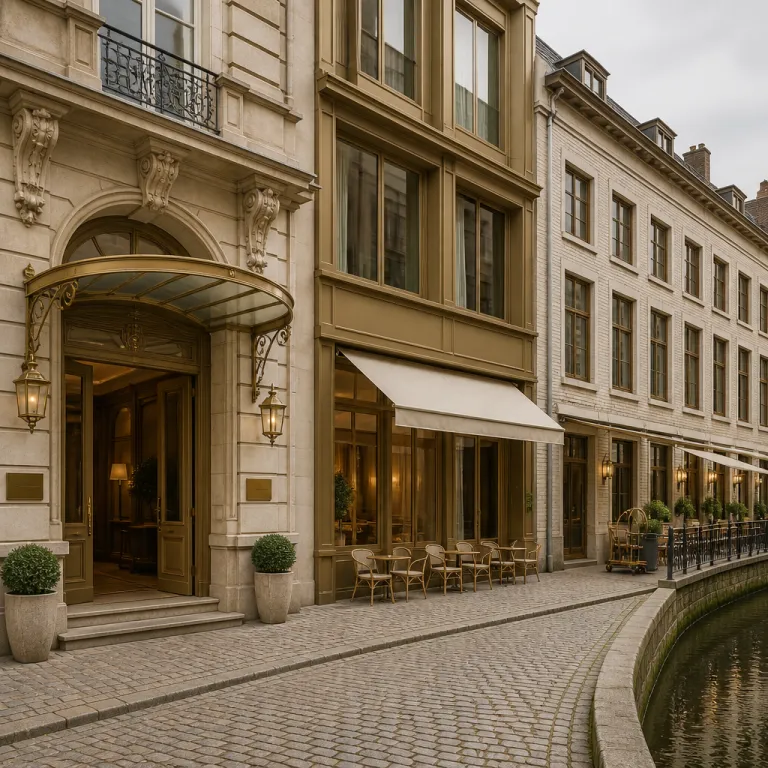
Brussels luxury hotels new openings 2026 and the new overnight equation
Brussels luxury hotels new openings 2026 is shorthand for a shift that is already reshaping the city. For years the Belgian capital felt like a transit lounge between Bruges, Antwerp and Paris, but the latest wave of high-end hotel projects means the city will finally reward an extended stay. Business travelers who once booked a single night in a functional city hotel now linger for long weekends, drawn by new rooms, new restaurants and a far richer cultural scene.
New lifestyle properties in the Northern Quarter, the revived Hotel Metropole on Place de Brouckère and the reborn Kanal-Centre Pompidou form the backbone of this change in the heart of the city. Each address is positioned differently, yet together these luxury hotels create a critical mass of reasons to visit Brussels rather than simply pass through it. When you browse a curated booking website such as mybelgiumstay.com, you now see a coherent narrative of luxury, culture and urban energy instead of a scattered list of isolated properties.
For travelers comparing Brussels’ latest luxury openings for 2026 with established addresses, the value proposition is striking. Room rates at a top luxury hotel in Brussels often sit thirty to forty percent below comparable properties in Paris or Amsterdam, while rooms and suites feature refined finishes, serious spa programs and credible fine dining. That pricing advantage, combined with shorter queues, generous spaces and authentic neighbourhoods, is exactly why the city will appeal to executives turning business trips into city escapes.
The new openings also sit within a broader story of urban redevelopment and cultural heritage stewardship. Kanal-Centre Pompidou occupies a former Citroën factory, its 35,000 square metres of galleries and public spaces anchoring a once neglected canal district that is now firmly on the map. As these cultural venues and hotels open in tandem, they create a virtuous circle of demand, giving travelers a reason to book rooms, linger in restaurants and bars, and experience Brussels as a destination in its own right.
The Standard, Brussels: New York attitude in the Northern Quarter
The Standard, Brussels is the headline act in the Brussels luxury hotels new openings 2026 conversation, even though its doors opened slightly earlier. Rising around twenty-eight stories above Boulevard Roi Albert II in the Northern Quarter business district, this city hotel brings the brand’s New York and Amsterdam design vocabulary to a part of Brussels that once emptied after office hours. The roughly 200 rooms and suites are elegantly designed rather than ostentatious, with playful art, clever lighting and a layout that makes even compact rooms feel like generous living spaces.
Extended stay suites at The Standard, Brussels are a quiet gift for business travelers who will work in the city for a week or more. These rooms and suites combine residential touches such as kitchenettes and lounge areas with hotel services, so you can host informal meetings by day and retreat to the rooftop bar by night. Amenities include a fitness centre, free Wi-Fi, and on-site dining options, and that concise list understates how the property uses its restaurants and bars as social engines for the entire neighbourhood.
The rooftop restaurant and bar on the upper floors crown the tower with panoramic city views that finally make the Northern Quarter feel like a destination. From here you see the canal, the historic heart of Brussels and the emerging skyline around Place de Brouckère, while the bar team leans into low intervention wines and precise cocktails rather than sugary signatures. As one recent guest told a Belgian travel magazine, “you look out over the whole city and suddenly understand why people are choosing to stay here for the weekend instead of catching the next train to Paris.” For visitors who usually default to youth hostel stays in Brussels for stylish city escapes, this is the grown up upgrade, with a pool of creative locals and visiting artists turning the public spaces into a genuine scene.
Design wise, The Standard, Brussels avoids pastiche and instead uses colour, texture and art to feature luxury in a way that feels contemporary. Public spaces flow into one another, so the lobby bar, casual dining room and co working corners operate as one flexible living room for the city. That sense of permeability between hotel and street is exactly what Brussels needed; it signals that this is not a sealed corporate tower but a luxury hotel that belongs to the city around it.
Hotel Metropole and Hotel Astoria: Belle Époque gravitas for the modern traveler
While The Standard, Brussels speaks to the future, Hotel Metropole and Hotel Astoria reconnect the city with its Belle Époque grandeur. The Metropole’s restoration, widely reported at several tens of millions of euros, has turned a fading grand hotel on Place de Brouckère into a flagship again, with more than 250 rooms that respect the building’s art deco and Belle Époque bones while quietly upgrading every system behind the scenes. Marble columns, gilded ceilings and stained glass now frame rooms and suites that finally match international expectations for a five star luxury hotel.
The restoration is not just cosmetic; it is also about sustainability and long term relevance. Energy-efficiency upgrades inspired by certifications such as BREEAM mean the hotel will operate with far lower consumption, while new spa facilities, an indoor pool and a modern fitness centre bring wellness into a building once known mainly for its bar. Guests move from the historic lobby to contemporary spa spaces without jarring transitions, and the indoor pool feels like a calm retreat from the city rather than an afterthought squeezed into a basement.
Hotel Astoria, a short walk away near Rue Royale, adds another layer to the Brussels luxury hotel renaissance for 2026, even if its rebirth is more about careful restoration than radical reinvention. This former royal favourite is being repositioned as a discreet city hotel with a strong sense of cultural heritage, where art deco details and Belle Époque flourishes are preserved rather than overwritten. For travelers who fell in love with serene Belgian addresses such as the lakeside retreats around Minnewater Park in Bruges, this is the Brussels equivalent: a place where history, service and quiet luxury align.
Both Hotel Metropole and Hotel Astoria will appeal to guests who care as much about narrative as about thread count. Their rooms and suites are not generic; they are elegantly designed to frame original mouldings, tall windows and, in some cases, sweeping city views over the historic heart of Brussels. When you compare these properties with a typical Parisian grand hotel, the pricing advantage becomes obvious, and that differential is one of the strongest arguments for choosing Brussels as your next European city escape.
Kanal-Centre Pompidou and the rebirth of the canal district
No discussion of Brussels luxury hotels new openings 2026 makes sense without Kanal-Centre Pompidou. This 35,000 square metre art centre occupies a former Citroën factory on Square Sainctelette, and its phased reopening from 2024 has given Brussels the cultural magnet it long lacked. The focus is contemporary artistic creation in various forms, and the building’s industrial volumes allow installations, performances and exhibitions on a scale that traditional museums in the city centre simply cannot match.
For hotel guests, Kanal changes how you plan a visit to Brussels. Instead of a quick loop around the Grand Place and a token museum, you now build an entire day around the canal district, moving between galleries, cafés and the water’s edge before returning to your hotel spa or rooftop bar for the evening. Urban revitalization, cultural tourism growth and hotel industry expansion all intersect here, with new hotels and restaurants and bars opening in former warehouses and office blocks.
The Standard, Brussels sits within walking distance of Kanal, and that proximity is not accidental. Public private partnerships between the City of Brussels, international hotel investors and cultural institutions such as Centre Pompidou have deliberately clustered investments to create a dense, walkable urban experience. When you step out of the hotel and cross towards the canal, you feel how architectural renovation and cultural programming have turned once empty spaces into a lively extension of the city’s historic heart.
This cultural gravity also complements quieter Belgian experiences elsewhere, such as a remembrance weekend that is not only about grief in Ypres and around the Menin Gate. Travelers who split their time between reflective journeys in Flanders Fields and high energy city escapes in Brussels now find a coherent narrative of memory, art and contemporary life. That blend of depth and pleasure is exactly what sophisticated travelers expect from a European capital, and Brussels is finally delivering it with confidence.
Hyatt, loyalty and why Brussels now rewards repeat stays
The integration of The Standard, Brussels into a major international loyalty ecosystem is a quiet revolution for frequent travelers. For years, loyalty members struggled to find a critical mass of luxury hotels in the city that would reward repeat visits with meaningful benefits. Now the combination of design-led lifestyle properties, restored grand hotel addresses and future branded projects means Brussels will sit more naturally on the circuit for executives who already split their time between London, Amsterdam and Paris.
From a practical perspective, this matters as much as any rooftop bar or indoor pool. When you know that your stay in Brussels will earn or burn the same points as your nights in New York or Singapore, extending a business trip into a leisure weekend becomes an easy decision. The city hotel landscape suddenly feels joined up, with a mix of contemporary design led properties and heritage rich hotels that all speak the same loyalty language.
Real estate dynamics around Place de Brouckère underline how structural this shift has become. As Hotel Metropole reopens and surrounding office blocks convert into mixed use spaces with restaurants and bars, co working hubs and residential units, the area is evolving from a traffic choked crossroads into a genuine urban square. That transformation supports higher quality dining options, from brasserie style fine dining in historic interiors to more experimental concepts that will appeal to guests who usually gravitate towards addresses like Hotel Amigo for their meals.
For travelers comparing Brussels luxury hotel openings for 2026 with established favourites such as Hotel Amigo or other long standing five star stalwarts, the choice is no longer binary. You can stay loyal to a brand, enjoy feature luxury amenities such as a full service spa and pool, and still feel plugged into the most interesting parts of the city. In that sense, Brussels is finally competing for the overnight traveler not with slogans, but with a credible ecosystem of hotels, culture and gastronomy that rewards those who stay a little longer.
How to choose your Brussels luxury stay: neighbourhoods, style and value
Choosing between the Brussels luxury hotels new openings 2026 and the city’s established icons comes down to how you like to experience a place. If you want to feel the pulse of an emerging district, The Standard, Brussels and the canal side hotels place you close to Kanal-Centre Pompidou, new restaurants and bars and evolving public spaces. Travelers who prefer classic European glamour will gravitate towards Hotel Metropole, Hotel Astoria or long standing favourites such as Hotel Amigo, where polished service and a central location define the stay.
Style is the second filter, and here Brussels offers more nuance than many visitors expect. The Standard, Brussels leans into contemporary design with playfully elegant rooms, while Hotel Metropole and Hotel Astoria foreground Belle Époque and art deco details in their public spaces and suites. A property like Hotel Amigo, by contrast, balances heritage with a more understated modern aesthetic, making it a reliable choice for guests who want a luxury hotel that feels international yet rooted in the city.
Value remains Brussels’ trump card compared with Paris and Amsterdam. For the same budget that might secure a compact room without a pool or spa in those cities, you can often book larger rooms, access a full hotel spa with an indoor pool and enjoy serious fine dining on site in Brussels. When you factor in the city’s compact scale, efficient transport and walkable historic heart, the overall experience feels both more relaxed and more generous.
As the market matures, expect more properties to feature luxury wellness facilities, thoughtful dining options and rooftop bar concepts that make the most of the city views. The key is to use a curated booking website that understands Brussels at street level, rather than relying on generic rankings that flatten every hotel into the same grid. With the right guidance, your next visit to Brussels will feel less like a stopover and more like the centrepiece of your European itinerary.
FAQ
What amenities does The Standard, Brussels offer ?
Amenities include a fitness center, free Wi-Fi, and on-site dining options. Guests also benefit from a rooftop restaurant with panoramic city views, flexible public spaces for informal work and socialising, and convenient access to the canal district and Kanal-Centre Pompidou.
When did Kanal-Centre Pompidou reopen ?
Kanal-Centre Pompidou began reopening in 2024 after a major transformation of the former Citroën factory into a 35,000 square metre contemporary art centre. Its return has significantly strengthened Brussels’ cultural offer and supports the city’s ambition to attract more overnight visitors.
What is the focus of Kanal-Centre Pompidou ?
The focus of Kanal-Centre Pompidou is contemporary artistic creation in various forms, from large scale installations to performance and multimedia work. The generous industrial spaces allow curators to stage ambitious exhibitions that complement, rather than duplicate, the collections in central Brussels museums.
How do Brussels luxury hotels compare in price to Paris and Amsterdam ?
Luxury hotels in Brussels typically cost around thirty to forty percent less than comparable properties in Paris or Amsterdam, while still offering high service standards and strong amenities. This pricing advantage makes it easier to upgrade to larger rooms, suites or hotels with full spa and wellness facilities without stretching your budget.
Which Brussels neighbourhoods are best for a first luxury stay ?
For a first visit focused on sightseeing, the historic centre around the Grand Place and Hotel Amigo offers immediate access to major landmarks and classic dining. Travelers interested in contemporary culture and emerging food scenes may prefer the Northern Quarter and canal district, where The Standard, Brussels and Kanal-Centre Pompidou anchor a rapidly evolving urban landscape.